
Most case study films don’t fail on the day of the shoot. The customer shows up, the light is good, the answers are honest. They fail later, in the edit, when nobody decides what the film is actually about.
You can spot it straight away. The film opens with a logo and a wide shot of an office. Someone says how great the partnership has been. There’s a product screen, some upbeat music, a handshake. Two minutes later the viewer knows the customer is happy, but not why, and not whether any of it applies to them.
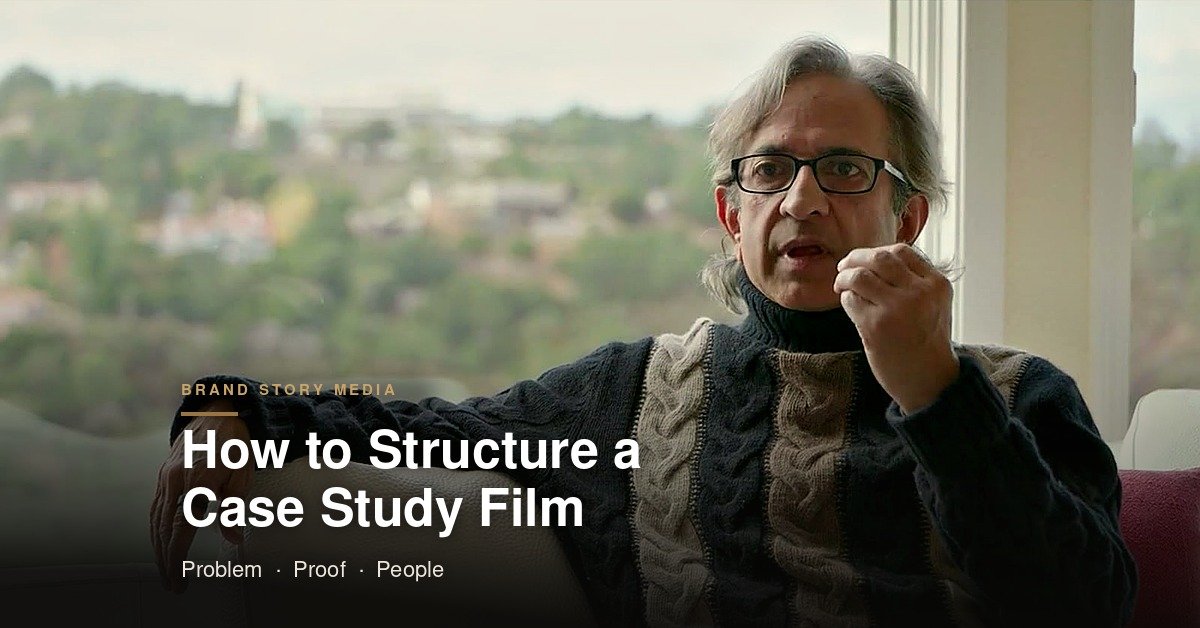
A strong case study film works differently. It has a spine. When we sit down to cut one, we build it around three movements: problem, proof, people. This is how we structure a case study film so a sales team gets something that actually helps move a deal.
Why structure matters more than footage
A case study film is a story told by someone who doesn’t work for you. That’s its power. A buyer will believe a peer in a way they’ll never believe your homepage.
But a real customer interview is messy. People circle back, start answers in the middle, and save the best line for the moment after you think they’ve finished. An hour of honest conversation holds a great film, and also several bad ones. Structure is how you find the good one.
It also decides who the film is for. A case study film isn’t made for the customer on screen. It’s made for the next buyer: the one who has the same problem, is weighing the same risk, and needs to picture themselves on the other side. Every structural choice should serve that person.
Movement one: the problem
Open on the problem, told in the customer’s own words. Not your description of their industry. Not a slide. Their experience of what wasn’t working.
Make the problem specific
“We needed a better solution” is not a problem. “Every Monday, three of us spent the morning rebuilding the same report by hand” is. Specific problems are what make a viewer lean in and think, that’s us.
In the interview, we ask for moments, not summaries: the day it came to a head, the workaround everyone hated, the call that made them start looking. In the edit, we put that moment near the top.
Give the problem stakes
A problem without consequences is just an inconvenience. Let the customer say what it cost them: time with their team, a launch that slipped, trust with their own clients. You don’t need a number for this. A plain sentence about how it felt is often stronger.
Keep it short
The problem section sets the hook. It shouldn’t become a complaint. In most of our case study edits, the problem lands in the first stretch of the film, then gets out of the way.
Movement two: the proof
This is where most case study videos go soft. The customer says “it’s been great” and the film moves on. Proof is the part a sceptical buyer is actually watching for.
Show the change, not the praise
Proof is the difference between before and after, told and shown. What do they do now that they couldn’t before? What stopped happening? What does Monday morning look like now?
We look for answers that describe a change in behaviour, not a feeling about a vendor. “We stopped rebuilding the report” is proof. “They’re a fantastic partner” is a compliment.
Let the camera carry part of the proof
This is where documentary craft earns its keep. While the customer talks, the picture can show the work: the screen they now use, the floor where the process runs, the meeting that used to take an hour. B-roll filmed where the work happens makes a claim feel real.
We plan these shots before the shoot, from the interview themes, so the edit has pictures that match the words.
Numbers only if they’re theirs
If the customer has a result they’re happy to stand behind on camera, it can be the strongest line in the film. If they can’t share figures, don’t invent precision. A clear before-and-after description is still proof. Never put a number in a customer’s mouth.
Movement three: the people
The last movement is about who this change was for. It’s what makes a case study film feel like a film and not a feature list.
Return to a human being
End on a person, not a product. The manager who got her mornings back. The technician who now trusts the readings. The founder who can finally plan the next quarter. When the camera stays on a face for an extra beat, the viewer remembers the story.
Let the customer recommend in their own words
The close is often a short, unprompted line about who should do what they did. It’s far more persuasive than a scripted endorsement, because it sounds like advice between peers.
Keep your brand in the background
The final image belongs to the customer. A logo at the end is fine. A sales pitch at the end undoes the trust the film just earned.
How we build the edit
Structure starts before the cut. Here’s the shape of the process we use on customer story films.
1. Interview for all three movements
We plan the conversation around problem, proof and people, with a few questions for each. If a movement is thin in the interview, it will be thin in the film. That’s why we cover how to film a customer case study as its own craft.
2. Write a paper edit
Before touching the timeline, we read the transcript and pull the strongest lines into a simple outline under three headings. This customer story film outline becomes the skeleton. It’s quick to change on paper and slow to change in the edit.
3. Cut the radio edit first
We assemble the interview as audio only, as if it were a radio piece. If the story works with your eyes closed, the picture will make it better. If it doesn’t, no amount of B-roll will save it.
4. Layer the picture
Then we add the proof shots, the moments of people at work, and the quiet frames that let a line breathe. Music comes last, and stays under the voice rather than driving the film.
5. Plan the cutdowns from the master
A full case study film is the anchor. From the same structure you can pull shorter versions: a problem-led teaser, a proof clip for a sales email, a single strong line for social. Because the master has a clear spine, the cutdowns hold up on their own.
Common structure mistakes
- Opening on the vendor. Viewers decide quickly whether a film is about them. Start with the customer’s problem, not your company.
- Proof by adjective. “Seamless,” “game-changing” and “great partner” are not evidence. Look for a change someone can describe.
- Too many voices. One main customer voice, maybe one supporting voice. Every extra speaker dilutes the story.
- Ending on a pitch. Let the customer close. Your call to action belongs on the page around the film.
If you want a pre-shoot list to go with this, our case study film checklist covers who to interview and what proof to gather.
FAQ
How long should a case study film be?
Long enough to tell problem, proof and people clearly, and no longer. For most B2B customer stories, that means a few minutes for the full film, with shorter cutdowns for email and social.
What if the customer can’t share results?
You can still build strong proof. Describe the change in how they work, show it on camera, and let them say what it meant to them. Honest specifics beat vague numbers.
Who should approve the structure?
Agree the three movements with your team and the customer before the shoot, then share the paper edit before the fine cut. It saves rounds of revisions later.
Planning a case study film?
Brand Story Media makes documentary-style case study films for companies across Canada, built around real customers and a clear story. If you have a customer story worth telling, book a call and we’ll help you shape it.