Most products ask for attention. Healthtech asks for trust.
When someone watches a film about a project management app, they’re wondering whether it will save them time. When they watch a film about a monitoring device, a care platform or a clinical tool, a different question sits underneath every frame: can I trust these people with my health, or my patients’ health?
That question shapes everything about how we make a healthtech brand film in Toronto. The camera can’t answer it with polish. It answers it with clarity, honesty and people who are clearly real. This is our director’s view on how to get there.
Why healthtech stories need a different approach
Toronto has a deep health ecosystem: hospitals, research institutes, startups and the investors and partners around them. Many of the people watching your film will be clinicians, administrators, caregivers or patients. They’re careful viewers. They notice when a claim is vague, when an actor is playing a patient, or when the music is doing the work the story should be doing.
So the usual brand film playbook needs adjusting. Big promises and fast montage don’t build trust here. What does is a film that slows down enough to show one real thing clearly.
A brand film in this space isn’t a product demo, and it isn’t an ad. It’s a story about why your company exists, who it serves, and what changes for them. The product is part of that story, not the whole of it.
Clarity: say one thing people can understand
Healthtech companies often know too much. There’s the science, the regulatory path, the clinical evidence, the integrations, the business model. All of it matters. Very little of it belongs in a two-minute film.
We push for one idea a viewer can repeat after watching. Not “an AI-enabled, interoperable remote monitoring platform,” but something a caregiver would say to a friend: it lets my dad’s doctor see what’s happening between appointments.
A few habits help:
- Explain it like you would to a patient. If a nurse or a family member couldn’t follow the first thirty seconds, the film is too technical.
- Show the moment of use. A hand on a device, a reading on a screen, a conversation in a clinic. Concrete images do more than any feature list.
- Leave the deep detail for other formats. Clinical results, technical specs and pricing belong in decks, papers and follow-up conversations. The film’s job is to earn that next conversation.
Consent: the part you plan before anything else
In health, the people with the most powerful stories are often the most vulnerable. That puts consent at the centre of production, not at the end of it.
Patients and members
Anyone who shares a health experience on camera should understand exactly where the film will appear, how long it will be used, and that they can say no at any point before release. We walk through this before filming, not on the day, and we give people time to think about it.
We also avoid capturing anything that identifies someone who hasn’t agreed to be filmed: other patients in a waiting room, names on screens or charts, faces in the background of a ward. In Ontario, personal health information is protected by law, and the Information and Privacy Commissioner of Ontario explains people’s rights around it. Your privacy and legal teams should guide what can be shown. Our job is to design the shoot so it respects those limits from the first frame.
Clinicians and staff
Doctors, nurses and technicians are often the most credible voices you have, and the busiest. We schedule around their shifts, keep interviews short and focused, and never put words in their mouths. A clinician who sounds like they’re reading a script loses the very credibility you wanted from them.
Claims
What a person says on camera can count as a claim about your product. If your product is a regulated health product, Health Canada’s advertising requirements may apply to how it’s promoted. We build the script and interview questions with your regulatory and medical teams involved, so the story stays honest and the edit doesn’t need to be rebuilt later.
Human stakes: one person, one real change
The strongest healthtech films we’ve seen, and made, don’t try to show everyone. They follow one person closely.
When we made a film for Vitaliti, a longevity program, we built it around a single member. It opens on the morning his blood pressure sent him to the emergency room, then follows his baseline tests, training and tracking. The film doesn’t need statistics to land. The audience understands the stakes because they’ve met the person.
That approach works across healthtech:
- A medtech brand video might follow one clinician through a shift where the device quietly changes how they work.
- A digital health platform might follow one caregiver managing a parent’s care from across the city.
- A clinical brand film might follow one research coordinator explaining why a study matters to the people enrolled in it.
The key is specificity. “Our platform helps thousands of patients” is forgettable. One patient’s Tuesday morning is not.
Craft choices that build trust
Trust also lives in the filmmaking itself. A few choices we make on almost every healthtech shoot:
- Natural light and real places. Clinics, homes and labs as they really look, not over-styled sets. Viewers can tell the difference.
- Interviews, not presenters. People speaking in their own words, guided by good questions. Our post on on-camera interview tips covers how we help people relax.
- Restrained music and sound. Let the room breathe. A quiet moment of a patient thinking says more than a swelling score.
- Honest pacing. Give the important moments time. Rushing a health story makes it feel like marketing.
Planning a healthtech brand film in Toronto
Healthtech shoots usually involve more people than a typical brand film: clinical leads, privacy officers, communications teams and sometimes hospital partners. Building that into the schedule early saves weeks later.
A simple order of work:
- Agree on the one idea and who the film is for: patients, clinicians, partners or investors.
- Bring in privacy, legal and regulatory reviewers before scripting, not after the edit.
- Find the right person to follow, and walk them through consent in plain language.
- Scout the locations and agree on what can and can’t appear on camera.
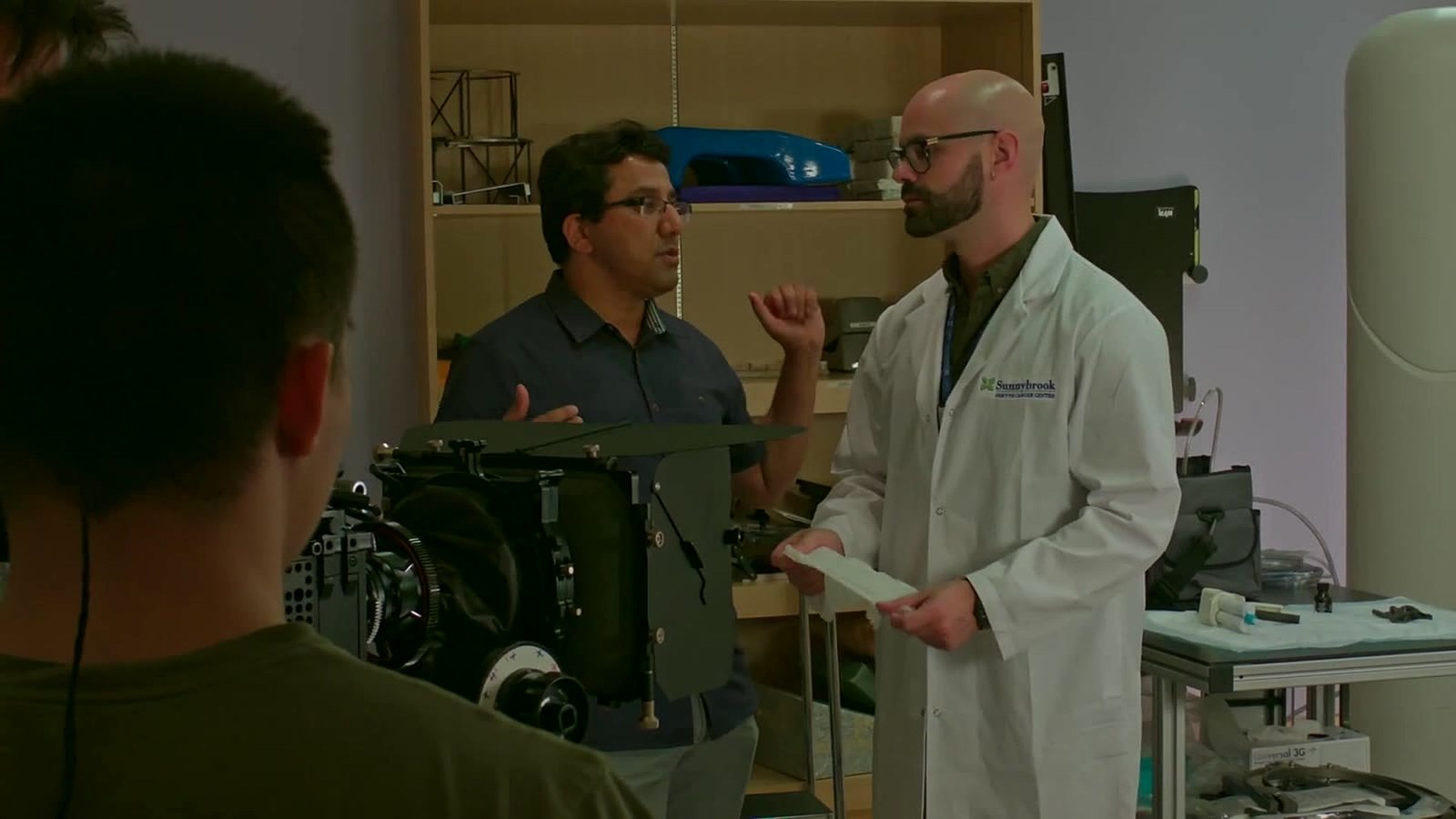
- Shoot small and quiet, with a crew that respects clinical spaces.
- Review with the same team that approved the plan, so there are no surprises.
If you’re also preparing to raise, our guide to healthtech investor pitch videos covers how the same trust-first thinking applies to a pitch.
How Brand Story Media approaches healthtech films
We’re a Toronto studio of documentary filmmakers. On a healthtech project, we start by listening: to your team, to the people you serve, and to the people who have to sign off. Then we build a film around one clear idea and one real human story, made with the care the subject deserves.
If you’re a Toronto healthtech or medtech company thinking about your story, book a call. We’ll talk through the idea before anything else. You can also see more about our brand films.
Frequently asked questions
What is a healthtech brand film?
It’s a short documentary-style film that shows why a health technology company exists, who it serves and what changes for them, told through real people rather than a product demo.
Can patients appear in a healthtech brand film?
Yes, with informed consent. They should understand where the film will be used and for how long, and be free to decline before release. Your privacy and legal teams should be involved from the start.
How do you handle medical or product claims on camera?
We plan interview questions and scripts with your regulatory and medical reviewers, so what people say stays accurate and the film doesn’t need to be re-edited later.
Do you film in hospitals and clinics?
We can, with the site’s permission and rules in place. We keep the crew small, agree on what can appear on camera, and work around patients and staff.