
Most corporate videos start with a camera. A good brand film starts with a question: what is actually true about this company, and who can say it best?
That’s the documentary habit. A documentary director doesn’t arrive with the story already written. They go looking for it, listen hard, and build the film around what they find. Applied to a corporate brand film in Toronto, that habit is the difference between a video people skip and one they finish, remember and share.
Here’s how that approach works, step by step, from the first call to the final cut.
Story first, camera second
The camera is the last decision, not the first. Before anyone talks about lenses, drones or locations, a director wants to understand three things:
- Who the film is for. Buyers, investors, future hires and your own team all need different things from the same company.
- What they should feel and believe by the end. Not a list of features, but one clear idea they carry out of the room.
- What is true and provable. The moments, people and work that already exist, and that a viewer can trust.
When those three answers are clear, most creative choices make themselves. When they aren’t, no amount of production value will hide it.
Discovery: finding the story you already have
Listen before you pitch
A documentary-led process begins with conversation, not a concept deck. In discovery we talk to the people who know the company from the inside: founders, team leads, people on the floor, and sometimes customers. We ask open questions and pay attention to the answers that come with energy behind them. A story usually shows up in the details people tell without being asked.
Look for tension and change
Every story worth watching has something at stake. For a company, that might be a problem customers kept running into, a hard decision, a turning point, or the reason someone stayed when it would have been easier to leave. A brand film without tension is a brochure. With it, it’s a story.
Write it down
Discovery ends with a short creative brief or treatment: the audience, the central idea, the likely voices, the places we’ll film and how the film will be used. If you don’t have a brief yet, our video production brief template is a good start.
Casting real people, not spokespeople
The strongest voices in a corporate brand film are rarely the most polished ones. A director-led brand video in Toronto often works best with the people closest to the work: the engineer who solved the problem, the manager who built the team, the customer who took a chance on you.
Real people carry credibility that a script can’t buy. The director’s job is to find the ones with a story to tell, and to make them comfortable enough to tell it. That means short pre-interviews, no surprises on the day, and questions they can answer from experience rather than memory. Our guide to preparing your team for a brand film shoot covers what to tell them beforehand.
The interview is the spine of the film
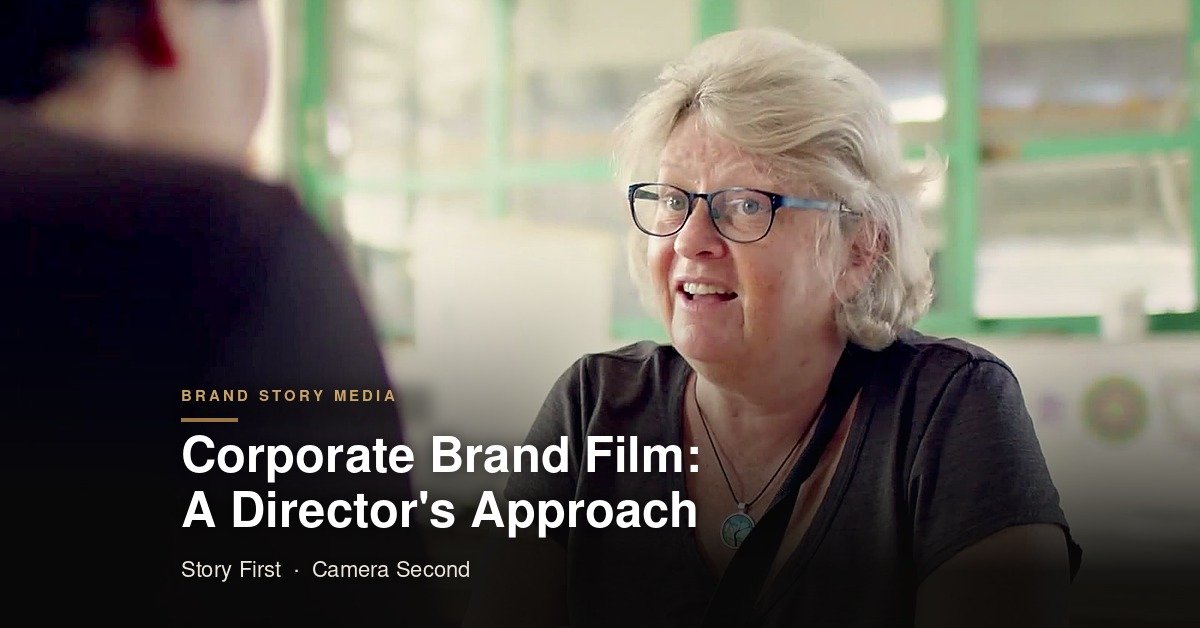
In a documentary-style brand film, the interview usually carries the story. Everything else is built around it.
Questions, not scripts
We don’t hand people lines to read. We ask questions that invite a real answer: “What did it feel like when that happened?” “What do people get wrong about this work?” “What would you tell someone starting today?” Memorized lines sound memorized. Real answers sound like a person.
Patience on set
The best line often comes after the first answer, once someone relaxes and says what they actually mean. A director leaves room for that. It’s one of the reasons we keep crews lean and interview setups calm: fewer people in the room, less pressure, more honesty. For on-camera guidance you can share with your team, see our on-camera interview tips.
Shooting the world around the story
Observational B-roll
Once we know the story, we film the world it lives in. That’s real work happening in real places: a team meeting, a product being built, a customer conversation, the commute in, the view from the shop floor. We look for moments rather than set-ups, and we shoot more texture than you think you need. In the edit, those details are what make a film feel lived-in.
Toronto as a character, when it helps
A corporate brand film in Toronto doesn’t need the skyline in every shot. But place matters. Whether it’s a downtown office, a plant in the GTA or a site out of town, the right location tells viewers who you are before anyone speaks. We scout with light, sound and access in mind, so the day runs on time and the space looks like itself.
Shaping it in the edit
Find the structure
The edit is where a documentary director writes the film for real. We review every interview, pull the moments that carry weight, and build a structure, usually some version of where things stood, what changed and why it matters now. The goal is a film that moves, not a sequence of talking heads.
Cut for length, then for places
Most brand films land somewhere between two and four minutes, but the right length depends on where it will play. Our guide on how long a brand video should be goes deeper. Once the main film is locked, we cut shorter versions for social, sales decks and events, so one shoot works across channels. See brand film cutdowns for how that works.
Sound, colour and restraint
Music, sound design and colour should support what people are saying, not compete with it. A restrained grade and a score that leaves space for the voices usually feel more cinematic than an obvious soundtrack.
What changes when a director leads the project
A director-led process isn’t about one person’s taste. It’s about having one clear point of view held from discovery to delivery. In practice that means:
- One person owns the story and protects it through every round of feedback.
- Interviews are planned around the edit, so nothing important is missed on the day.
- Fewer, better shoot days, because the film is already designed before the crew arrives.
- A finished film that feels like your company, not a template.
If you want to see how this compares with a longer, documentary-length piece, read our guide to brand documentaries in Toronto.
How Brand Story Media makes corporate brand films
We’re a Toronto production company built around documentary craft. We start with discovery, cast real people, film with a lean crew and shape the story in the edit. We work with companies across Toronto, the GTA and the rest of Canada. Our brand story films are where this approach shows up most clearly.
Book a call
Thinking about a corporate brand film? Tell us who it’s for, what’s changing in your company and when you need it. We’ll talk through a story-first approach and a realistic scope before you commit to anything.
Book a call with Brand Story Media →
Frequently asked questions
What is a corporate brand film?
It’s a short film that tells a company’s story through real people and real work. It focuses on who you are and why that matters, rather than listing products or features.
How is a documentary approach different from a regular corporate video?
A regular corporate video often starts from a script. A documentary approach starts with discovery and interviews, then builds the script from what people actually say. The result usually feels more honest and holds attention longer.
Do we need professional actors?
Usually not. Your own people and customers tend to be more credible on camera. A director’s job is to prepare them and make them comfortable.
How long does a corporate brand film take to make?
It depends on scope, access and the number of locations. Discovery, the shoot and the edit are separate phases, so we set a realistic schedule together on the first call.