
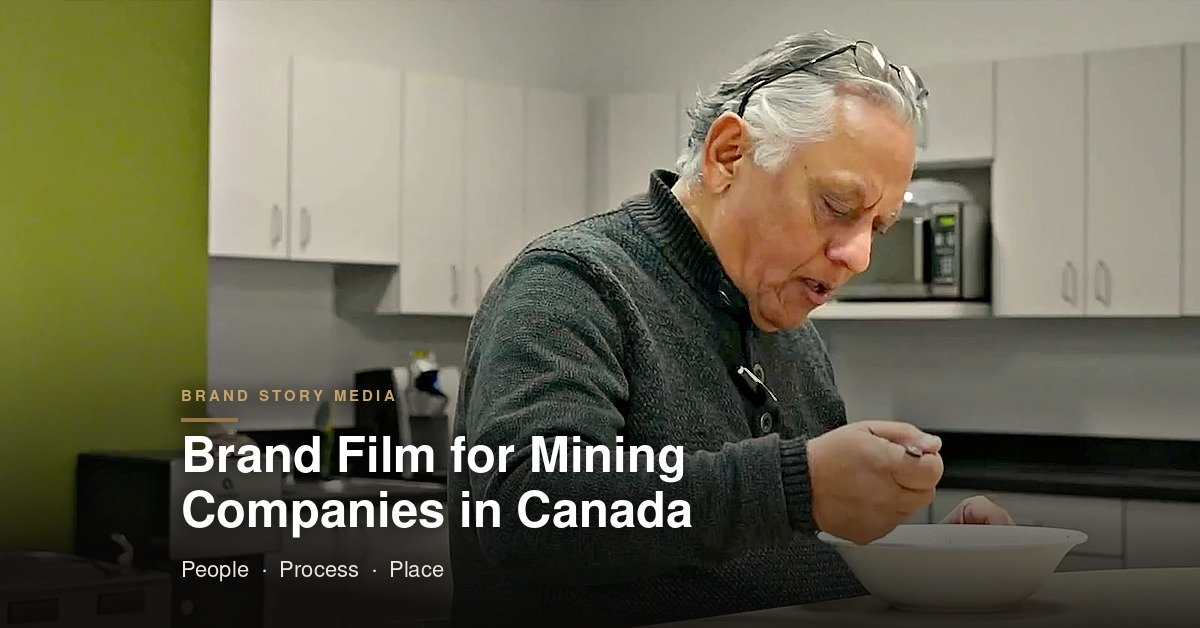
Most mining videos look the same. A drone sweeps over an open pit, a haul truck rolls past, a narrator lists tonnes and timelines, and the logo lands at the end. It looks expensive. It’s also forgettable, because every other company in the sector has the same shots.
A brand film for a mining company has a harder and more useful job. It has to make a viewer trust you: an investor deciding whether to back a project, a community member wondering what a new operation means for their town, a geologist or mechanic choosing where to build a career. Trust doesn’t come from scale. It comes from people, process and place, filmed honestly.
Here’s how we think about what to film on a Canadian mining or project site, and why each piece earns its place.
Start with who the film is for
Before anyone books a helicopter, decide who you most need to reach. Mining companies usually talk to several audiences at once, and each one needs something different:
- Investors and analysts want to see a credible team and a disciplined operation.
- Communities and Indigenous partners want to see respect, listening and a long-term commitment to the land and the people on it.
- Future employees want to see what the work and the camp life actually feel like.
- Customers and partners downstream want to understand where the material comes from and how it’s handled.
One film can speak to more than one of these groups, but it can’t speak to all of them equally. Pick a primary audience, and the rest of the decisions get easier. Cutdowns can serve the others later.
Film the people first
The single most valuable thing on any site is the people who run it. Not the CEO reading a statement, but the people closest to the work: the shift supervisor who knows every sound a crusher makes, the environmental technician sampling water at dawn, the camp cook who has fed crews for years, the young engineer on their first northern rotation.
A documentary approach means we spend time with these people before the cameras roll. We ask open questions and listen for the moments where someone talks about the work with real conviction. Those moments become the spine of the film.
What makes a strong on-camera voice
- Someone who does the work, not just someone who manages it.
- Someone who can explain a step in plain language.
- Someone who’s comfortable, or can become comfortable, with a small crew around them.
Usually that’s not who the communications team first suggests. That’s fine. Part of a director’s job is to find the right voices and prepare them well. If you’re planning interviews, our guide to on-camera interview tips covers how we help people relax.
Film the process, step by step
Mining is a process business, and process is quietly cinematic. Exploration, drilling, core logging, extraction, processing, reclamation: each step has its own textures, sounds and rhythms. A brand film doesn’t need to explain the whole value chain. It needs to show a few steps clearly enough that a viewer understands the care involved.
Good process footage tends to be close and specific. Hands sorting core samples. A technician checking a reading. Water being tested. A safety briefing before a shift. These shots say “this company knows what it’s doing” more convincingly than any wide aerial.
Safety is part of the story
On a mine site, safety isn’t a box to tick before the shoot. It’s part of what you’re showing. Crews in proper protective equipment, procedures followed on camera and briefings captured naturally all tell the viewer something true about your culture. We plan the shoot around your site rules and the escort and induction requirements, not the other way around.
Film the place, honestly
Canadian mining happens in some of the most striking landscapes in the country: northern Ontario, Quebec, the Prairies, British Columbia, the territories. The land is part of the story, and it deserves to be filmed with care.
That means more than drone shots. It means the light on a lake near camp, the road in during winter, the reclaimed area where something is growing back, the town where many of the workers live. Place gives a film its sense of scale and responsibility at the same time.
It also means being honest. If a viewer feels the landscape is being used as decoration, the film loses trust. Show the place as it is, and show how the company relates to it.
What to leave out
What you don’t film matters as much as what you do.
- Claims you can’t back up. If a number or a commitment appears on screen, it should be something you can point to publicly. When in doubt, leave it out or let a person describe the work instead.
- Restricted areas and sensitive information. Anything under confidentiality, anything a partner hasn’t approved, and anything that raises security concerns stays off camera.
- Generic B-roll. Stock-style shots of machinery could be from anyone’s site. Every shot should feel like it could only be yours.
- Speaking for communities. If Indigenous partners or local residents appear, they speak for themselves, with consent and on their own terms.
Plan the shoot around site access
Remote sites change the logistics of a shoot. Access is often the biggest constraint, so we plan for it early:
- Inductions and escorts. Most sites require safety orientation and an escort for visitors. We build that time into the schedule.
- Travel and camp. Fly-in or long-drive sites mean fewer days and a lean crew. Every shooting day has to count.
- Shift schedules. The best moments happen when real work is happening, so we plan around shifts, not around convenience.
- Weather and season. Winter roads, freeze-up and short daylight all affect what’s possible. Choosing the season is a creative decision as much as a practical one.
A small, experienced crew moves faster on site, needs fewer escorts and disrupts operations less. That’s one reason a documentary-style approach suits mining so well.
How Brand Story Media approaches mining brand films
We’re a Toronto production company built around documentary craft, working with companies across Canada. For mining and resource firms, we start with discovery: who the film is for, what’s true and provable, and who on your team can say it best. Then we plan a lean shoot around your site rules and shape the story in the edit. Our brand story films are where this approach shows up most clearly.
If you’re weighing scope and budget, our guide to commercial production costs in Canada explains what drives the numbers.
Book a call
Planning a brand film for your mining company or project? Tell us who it’s for, where the site is and what’s changing in your business. We’ll talk through a realistic approach and scope before you commit to anything.
Book a call with Brand Story Media →
Frequently asked questions
What is a brand film for a mining company?
It’s a short film that tells a mining company’s story through its people, its process and the place it operates. It focuses on why the company can be trusted, rather than listing assets or production figures.
Can you film on remote or fly-in sites?
Yes. We plan around travel, camp logistics, safety inductions and escort requirements, and we keep the crew small so the shoot fits the site rather than disrupting it.
Who should appear on camera?
Usually the people closest to the work: operators, technicians, supervisors and engineers, alongside leadership. Community members or partners appear only with consent and speak for themselves.
How long does a mining brand film take to make?
It depends on the number of sites, travel, access and season. Discovery, the shoot and the edit are separate phases, so we set a realistic schedule together on the first call.
Can one film serve investors, communities and recruits?
One main film can, if it has a clear primary audience. We then cut shorter versions for the other groups so each one gets what it needs.