
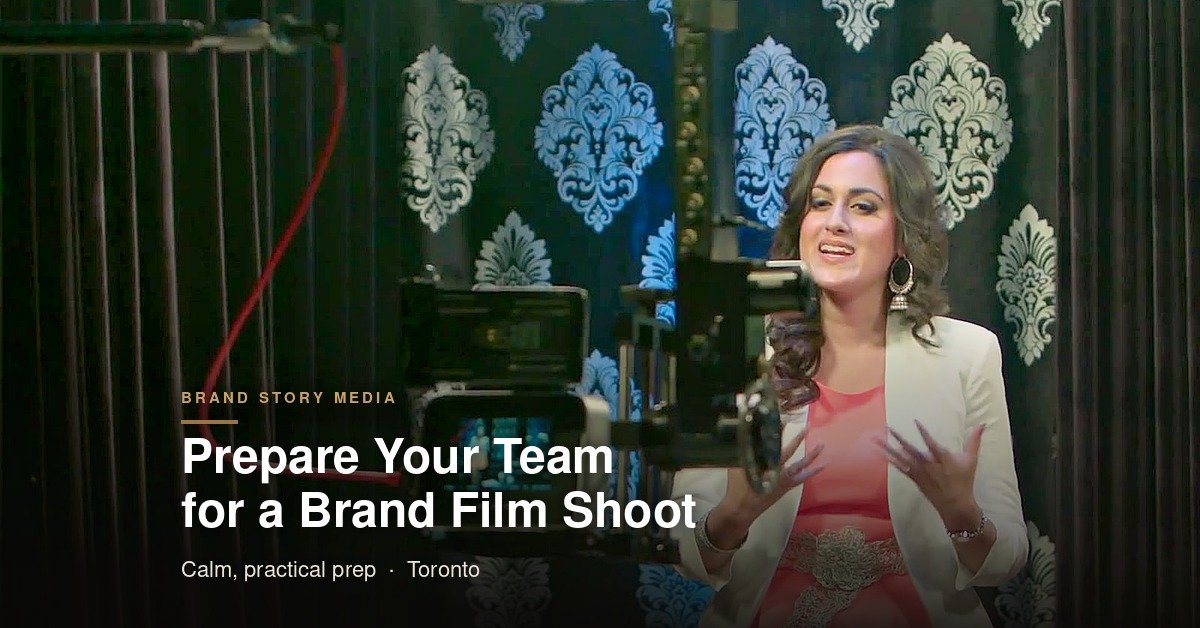
The date is booked, the crew is confirmed and the brand film is finally happening. Then someone on your team asks the question everyone is quietly thinking: “Do I have to be on camera?”
It’s a normal reaction. Most people aren’t nervous about the camera itself. They’re nervous about not knowing what’s coming, saying the wrong thing or looking awkward in front of colleagues. The good news is that almost all of that disappears with a little preparation.
This guide walks through how to prepare your team for a brand film shoot, from the weeks before to the morning of. None of it is complicated. The goal is simple: real people, relaxed enough to sound like themselves.
Why preparation matters more than polish
A brand film works when the audience believes the people in it. That belief comes from small things: a natural laugh, a pause before an honest answer, a story told in someone’s own words. It rarely comes from a perfectly delivered line.
Preparation isn’t about rehearsing people into performers. It’s about removing the surprises so they can relax. When your team knows what will happen, who will be in the room and what kind of questions to expect, they stop worrying about the process and start talking about the work they care about.
Two to three weeks before: pick the right people
Choose voices, not titles
The most senior person isn’t always the best storyteller. Look for people who are close to the work and can explain it in plain language: the project lead who solved the hard problem, the long-time employee who remembers how things started, the customer-facing team member who hears what clients actually say.
A mix usually works best. One leader to frame the vision, plus two or three people who can bring it to life with specific moments.
Ask, don’t assign
Invite people to take part and explain why you thought of them. Someone who agrees to be filmed will come across far better than someone who was told to show up. If a person is truly uncomfortable on camera, there are other ways to include them, such as showing them at work in the background footage.
Share the purpose of the film
Tell participants what the film is for and who will watch it. A recruiting film, an investor film and a customer story each call for a different tone. If you’ve written a video production brief, share the short version with everyone who will appear.
One week before: prepare for the interview
Talk through themes, not scripts
The single most helpful thing you can do is give each person a sense of the topics, not a list of answers to memorise. Scripted answers tend to sound recited. A short conversation about the themes (“we’ll ask how the project started and what changed for the client”) lets people gather their stories without locking themselves into exact wording.
Encourage stories with a beginning and an end
Good interview answers often follow a simple shape: what the situation was, what happened, and what it meant. Ask participants to think of one or two real moments they could describe in that way. Specific details, like a name, a place or a turning point, are what make a story feel true.
Explain how the interview will work
Many people don’t realise that the interviewer’s questions usually won’t appear in the final film. That’s why it helps to answer in full sentences that include the question. “The project started when…” works on its own. “Yeah, about two years ago” doesn’t.
Let them know they can stop, restart or ask to try an answer again at any time. Knowing there are no “live” mistakes takes a lot of pressure off.
Handle permissions early
Make sure everyone who appears on camera has signed whatever release or consent form your organisation and the production company use. Sort out access to locations, parking and building security in advance, and flag any areas, screens or documents that shouldn’t be filmed for privacy or confidentiality reasons.
What to wear on camera
Wardrobe questions come up on every shoot. A few simple guidelines cover most situations.
Wear what you’d wear on a good day at work
People look most comfortable in clothes they already feel good in. If your team usually wears jeans and sweaters, a suit will look like a costume. Aim for the polished version of what they normally wear.
Choose solid, mid-tone colours
Solid colours in mid-tones, such as blues, greens, burgundy and soft greys, tend to look good on camera and work with most backgrounds. Very bright white can glare under lights, and solid black can lose detail.
Avoid tight patterns, small stripes and large logos
Fine stripes, small checks and tight herringbone can create a flickering effect on camera called moiré. Large logos and slogans, especially from other brands, can distract from the person speaking and may need to be blurred later.
Think about small practical details
- Bring a second outfit option so the crew can choose what works best with the setting.
- Avoid noisy jewellery that can knock against a lapel microphone.
- Wear tops with a collar or placket where possible, so a small microphone can be clipped on easily.
- Keep hair and makeup close to how you normally look, with a little powder to reduce shine under lights.
The day before: a short corporate video shoot checklist
A quick checklist the day before saves a lot of stress the morning of.
- Confirm the schedule. Share call times, interview slots and locations with everyone involved.
- Book the rooms. Reserve interview spaces for the whole day, including setup and pack-down time.
- Plan for quiet. Let nearby teams know when interviews are happening, and check for noisy equipment, renovations or ventilation that can be paused.
- Tidy the background. Clear cluttered desks, whiteboards with sensitive notes and screens showing confidential information.
- Prepare B-roll moments. List the everyday activities the crew can film: meetings, workshops, product in use, people on the shop floor or in the field.
- Name a point person. Choose one person on your side who can answer questions, unlock doors and keep things moving.
The morning of the shoot
Ask participants to arrive a little early, but not so early that they sit around getting nervous. Keep water nearby, encourage a light meal beforehand and have everyone silence phones, smartwatches and laptop alerts. A single buzz can interrupt a great answer, and a few minutes of easy conversation before the camera rolls helps people settle in.
On camera: simple interview tips for your team
- Talk to the interviewer, not the lens. Most brand film interviews are framed with the person looking just off camera, which feels more like a conversation.
- Slow down a little. Nerves speed people up. A slightly slower pace sounds confident and is easier to edit.
- Pause before answering. A short pause gives a clean starting point for the edit.
- Use your own words. Skip jargon and internal acronyms. Explain things the way you would to a friend.
- It’s fine to show feeling. Pride, humour and honesty are what audiences remember.
How Brand Story Media prepares teams
We know most people we film aren’t professional presenters, and they don’t need to be. Before a shoot, we talk through the themes with participants, share what the day will look like and keep the interview conversational. On the day, we work around your team’s schedule and keep the set small and calm, so people can focus on telling their story.
See our brand story film services, or read about corporate video production in Toronto.
Book a call
Planning a brand film and wondering how to get your team ready? Tell us who you’d like to feature and what the film needs to do, and we’ll walk you through a calm, realistic plan for the shoot.
Book a call with Brand Story Media →
Frequently asked questions
How long does a brand film interview usually take?
Plan for about 30 to 60 minutes per person, including setup and a short warm-up conversation. Leave some buffer between interviews so nobody feels rushed.
Should we give our team the questions in advance?
Share the themes and the general topics, not a word-for-word list. That gives people time to think of real stories without memorising answers that sound scripted.
What should people avoid wearing on camera?
Avoid fine stripes, small checks, large logos and noisy jewellery. Solid, mid-tone colours in clothes people already feel comfortable in usually work best.
What if someone gets nervous during the interview?
That’s normal. A good interviewer will slow down, go back to an easier question and let the person restart whenever they like. Nervousness usually fades within the first few minutes.