
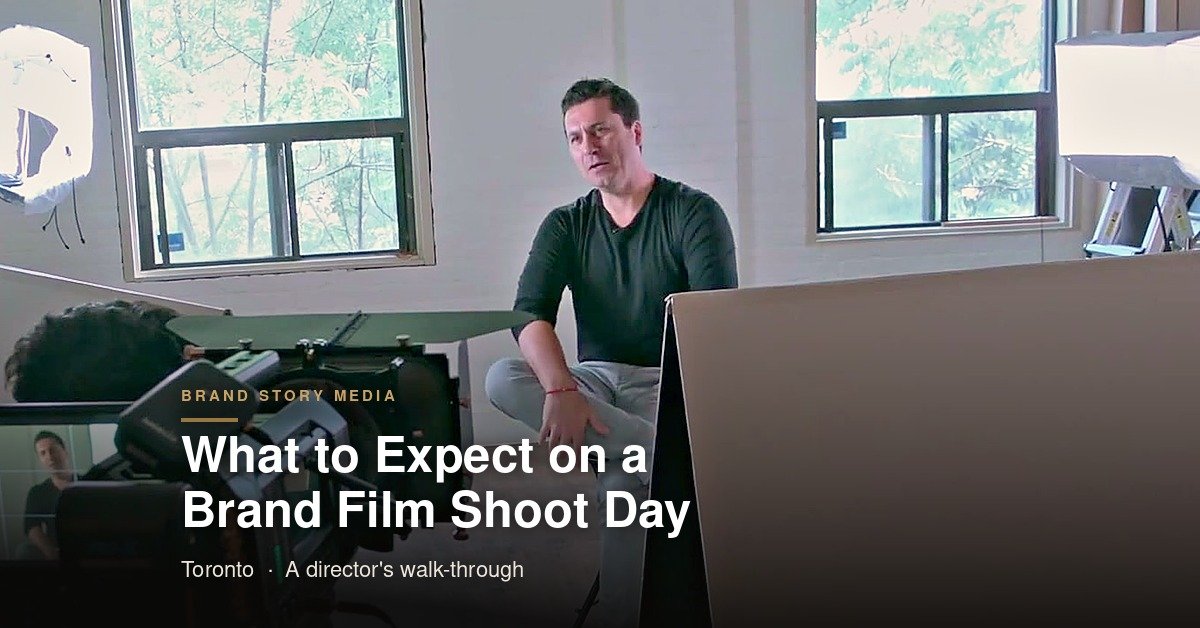
Most people only see the finished film. Two or three minutes of real people, good light and a story that lands. What they don’t see is the day it took to get there: the early call, the cases of gear coming up a freight elevator, the quiet minutes before someone sits down in front of a camera for the first time.
If your team is about to host a brand film shoot, it helps to know what that day actually looks like. Not so you can manage it, that’s our job, but so nothing feels like a surprise. This is a walk-through of a typical shoot day in Toronto, told from behind the camera.
If you’re still in the planning stage, start with our guide on how to prepare your team for a brand film shoot. This post picks up where that one ends: the morning the crew walks in.
Before anyone arrives
A shoot day starts long before call time. By the time we’re at your door, a few things are already settled:
- The story. We know what the film is about and which moments we need to capture.
- The schedule. A simple running order: who’s interviewed when, where B-roll happens, and when people need to be free.
- The locations. We’ve seen the space in person or on a video walk-through, and we know where the light falls.
- The contact. One person on your side who can open doors, find a quiet room and make quick calls on the day.
In Toronto, logistics shape the morning more than people expect. Loading docks, building security, elevator bookings, parking and traffic on the Gardiner or the 401 all eat into time. We plan around them so your team doesn’t have to.
Call time and setup
Crew call is usually an hour or two before the first interview. It feels early, but this is where the look of the film is built.
Lighting the space
Most offices aren’t designed for cameras. Overhead fluorescents flatten faces, and big windows change every few minutes. We shape the light with soft sources, flags and bounce so people look like themselves on a good day. We often move a plant or a chair. We rarely move anything you’d miss.
Sound
Sound is half the film. We’ll ask about the HVAC, the coffee grinder in the kitchen and the meeting room next door. Sometimes the quietest room isn’t the prettiest, and we’ll make the quiet one look good rather than fight noise in the edit.
The interview set
The interview chair is the heart of the day. We set the frame, test the lens, check the background for anything distracting, and then sit in the chair ourselves to make sure it feels comfortable. If someone will be seated for 30 minutes, the chair matters.
The interviews
This is the part people worry about most, and it’s usually the part they enjoy most.
Settling in
When someone sits down, we don’t roll right away. We clip on the microphone, chat about their morning, and explain what will happen. The crew stays small and quiet. Anyone who doesn’t need to be in the room steps out.
A conversation, not a performance
We don’t hand anyone a script. The director sits beside the camera and asks questions the way a curious person would. The person on camera talks to the director, not the lens. Good answers come from real memories, so we ask for moments: the first day, the hard week, the customer they still think about.
If someone stumbles, we simply ask again. Nothing is live, and every word can be shaped in the edit. Our post on how to look and sound natural on camera covers what helps people relax.
How long each interview takes
Plan for 30 to 60 minutes per person, including a few minutes to settle in. Founders and leaders who carry the main story often need the longer end. Supporting voices are usually quicker.
B-roll: filming the work itself
Between interviews, we film the world the story lives in. This is what viewers see while people are talking, and it’s where a brand film earns its cinematic feel.
Real work, not staged smiles
We look for the work your team actually does: hands on a keyboard, a conversation at a whiteboard, a product being built, packed or tested. We’d rather film a real meeting than a fake one, so we’ll often ask to quietly observe something that’s already happening.
A little direction
Sometimes we’ll ask someone to repeat a natural action, like walking into the room or opening a door, so we can catch it from another angle. It takes seconds, and we’ll always explain why.
Around the city
If the story calls for it, we may step outside for exterior shots of your building, your street or the neighbourhood around you. Toronto gives us a lot to work with, from the PATH and King Street towers to studios in the Junction and plants in Mississauga or Vaughan. A few shots of place help viewers feel where your story happens.
A sample shoot day schedule
Every project is different, but a single-location day often looks something like this:
| Time | What’s happening |
|---|---|
| 7:30 AM | Crew arrives, loads in, checks in with your contact |
| 8:00 AM | Lighting, sound and interview setup |
| 9:30 AM | First interview |
| 10:30 AM | Second interview |
| 11:30 AM | B-roll around the office or floor |
| 12:30 PM | Lunch |
| 1:15 PM | Third interview |
| 2:15 PM | More B-roll, detail shots, exteriors |
| 4:00 PM | Pickups, room reset, wrap |
Some films need two locations or a second day. We’ll tell you early if the story needs more time rather than squeezing it into a rush.
How we keep real people comfortable
Most people in brand films have never been on camera before. That’s a strength, not a problem. They sound like themselves. Our job is to protect that.
- Small crew. We keep the footprint light so the room still feels like your space.
- Clear expectations. People know when they’re on, how long it takes and what we’ll ask about.
- No gotchas. We never use someone’s words in a way they wouldn’t recognize.
- Breaks. Water, a pause or a quick walk down the hall can reset a nervous moment.
- Kindness. It sounds simple, but a warm, unhurried crew changes how people speak.
The best moments on a shoot day often happen after someone forgets the camera is there. Everything we do is designed to get them to that point.
Wrap, and what happens next
At wrap, we reset the rooms the way we found them, back up all footage on site, and confirm next steps with your contact. Then the film moves into the edit, where the real shaping begins.
You’ll see a first cut, share notes, and we’ll refine it together. If you’d like a sense of how we approach the whole process, from story to delivery, take a look at our services.
FAQ
How long is a typical brand film shoot day?
Most shoot days run about eight to ten hours, including setup and wrap. Many brand films are filmed in one day at a single location.
How many people come on a brand film shoot?
It depends on the project, but we keep crews small, often three to five people, so the space still feels calm and familiar.
Do people need to memorize anything?
No. We ask questions in a relaxed conversation and never use scripts for interviews. People speak in their own words.
Will the shoot disrupt our office?
Very little. We plan B-roll around your schedule, use quieter rooms for interviews, and leave the space as we found it.
Do you film outside Toronto?
Yes. We’re based in Toronto, film across the GTA and travel for projects across Canada.
Planning a brand film shoot?
If you have a story worth telling and people who can tell it, we’d love to help you make the day feel easy. Book a call with Brand Story Media and tell us about your team, your space and the story you want to tell.